What Slowdown? The Global Ambitions of Bulletproof's Gush Mundae
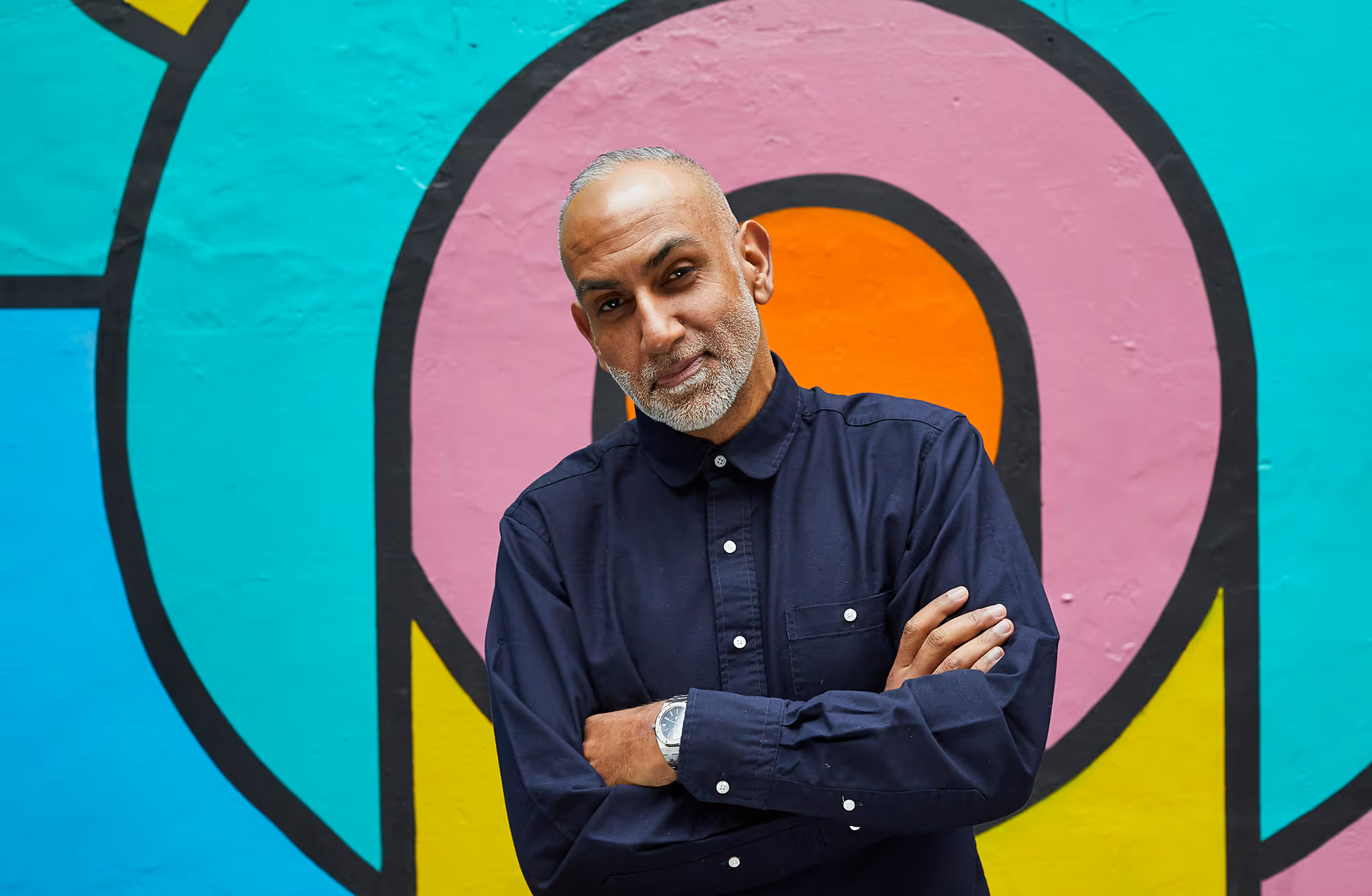
Clare Dowdy meets the brand agency’s founder to find out how and why he’s all-in on international growth.
While some in the design industry are struggling, Bulletproof is bucking the trend. While others are lowering overheads and practising the ‘hub and spoke’ approach – where a small core brings in specialists for specific jobs – they have audacious expansion plans.
Bulletproof already has 400 people in eight studios around the world. That might be enough to keep some leaders busy and happy enough. But Gush Mundae is still restless, and has his sights on India, Africa, Central Europe and the Middle East.
How is this independent agency doing this with no external investment? And where does Gush Mundae get the energy to keep expanding?
His origin story may provide some clues. He arrived with his family from India at the age of five, unable to speak English. The family experienced racism and Mundae didn’t get on well at school. “I’ve got a bit of a chip because I was an immigrant, the insecurity of failure,” he says.
Mundae’s art teacher spotted he had talent, and directed him towards Hounslow College, where he did an HND (Higher National Diploma) in design and advertising.
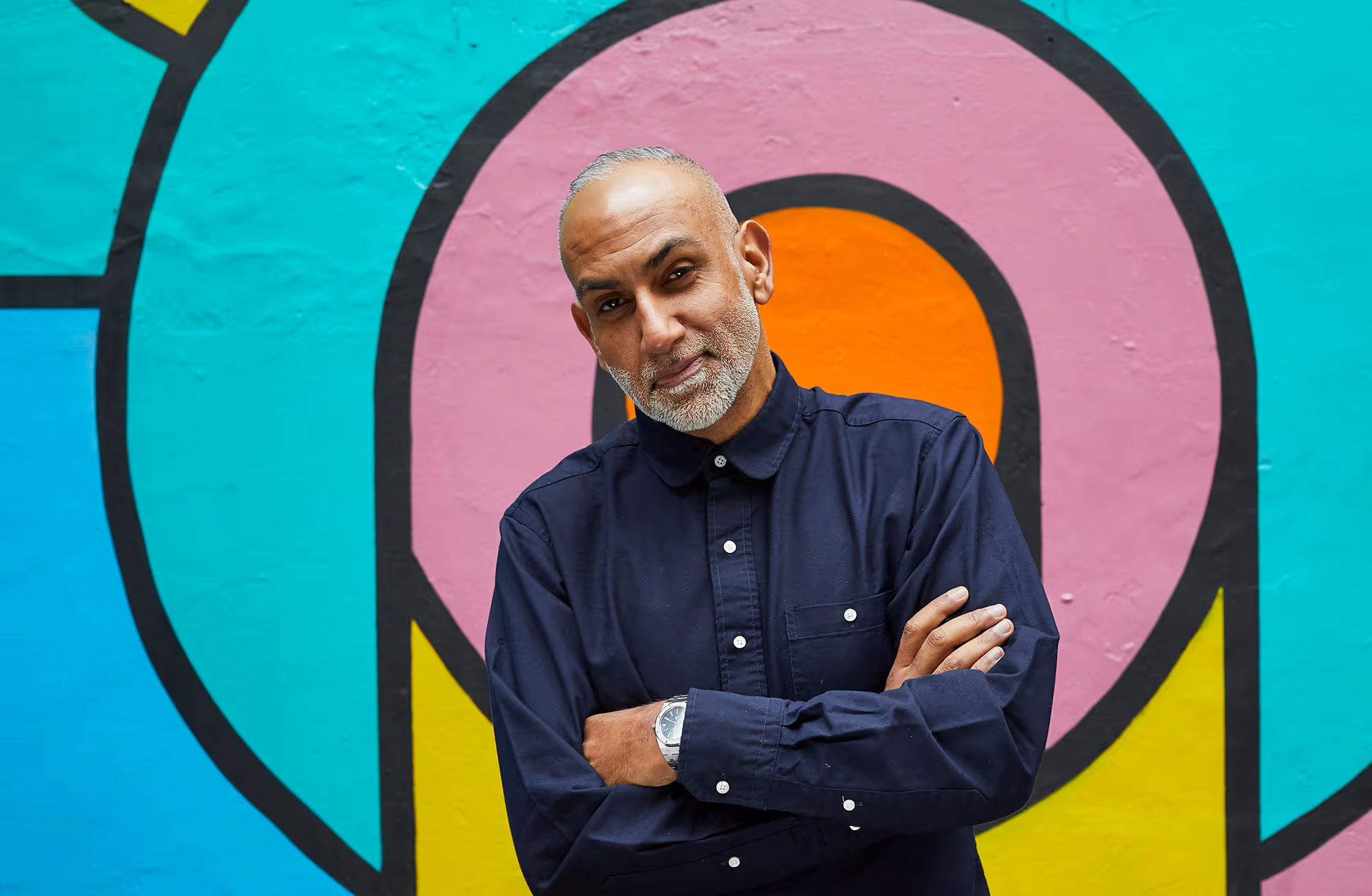
He worked at graphics agency Shoot That Tiger, and then spent a year with big-name designer Michael Peters, in the studio that became Identica. “I got to do a load of global work – I was flying business class at 23 years old,” he says. That was 1993, and perhaps it set the tone for his future ambitions.
His first design agency was short-lived. “My business partner liked the idea of having a business more than running a business,” Mundae explains.
So, he and college friend Jonny Stewart co-founded Bulletproof in 1998. Instead of a business plan, they had a vision. “We were going to be just 12 to15 creatives in London.
“I didn’t understand what we had – the power of creativity to solve business problems – until later on. But we started getting more work than we could manage.”
They were already working for Coca-Cola in the UK, but in the early 2000s, the brand’s US team invited them to Atlanta and handed them some work.
It was a key moment in Bulletproof’s expansive ambitions. “I realised we could grow this, because what we had was transferable to other countries,” Mundae says. Off the back of Coca-Cola, they focused on the US, and went state to state showing their work to potential clients. “We never heard anything back, we realised it was because we weren’t on the ground,” Mundae says. “As soon as we opened in New York, we got work.”
London, with its 200 staff, and New York, now 70-strong, funded Singapore, 40 staff and counting. That was followed by Amsterdam, Sydney, Shanghai, Melbourne and Dubai.
There’s a template for these outposts. They’re headed up by a creative, client services or strategy person who has worked in the London office – the mothership – for a fair bit of time, because “London has the purest DNA.”
It’s important that each location’s leaders have learned from Mundae, Stewart, and chief creative officer Nick Rees, and chief operating officer Kellie Chapple, and they know how they think. Each office is in a different stage of growth. Dubai, the newest, opened in May 2024. “It’s not profitable yet but it’s growing at a crazy rate.” So much so that some of its work is being taken up by London and Singapore, as Dubai doesn’t have a big enough team yet to handle it all.
Much of Mundae’s attention is on the studios which, like Dubai, are at a fledgling stage. He spends time in each, and despite his elevated position is fantastically hands-on. “I’m doing everything including meeting with clients, spending time with the team and pitching.”
But even the more established studios get regular visits, to check in with the team – he flies to New York five to six times every year, for example.
The focus in each studio can vary – Singapore is very experientially led, Dubai handles more corporate identity and some advertising, and Amsterdam is more about campaign work and brand.
But as with the hands-on leadership, the design of each space echoes the Bulletproof London aesthetic. They’re also all centrally located in their home city, because Mundae is a big believer in “having inspiration all around” so people can “get out of their headspace.”
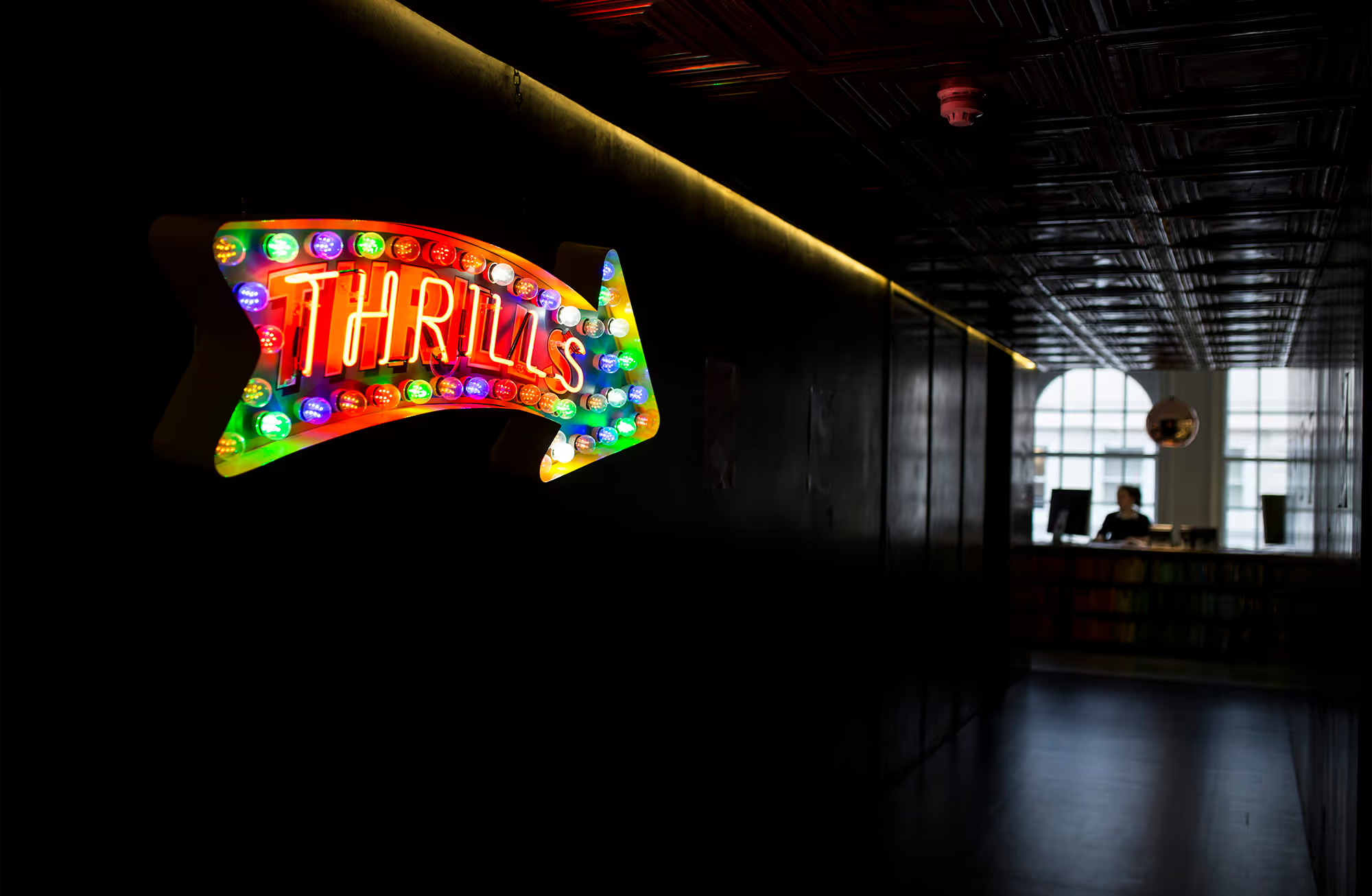
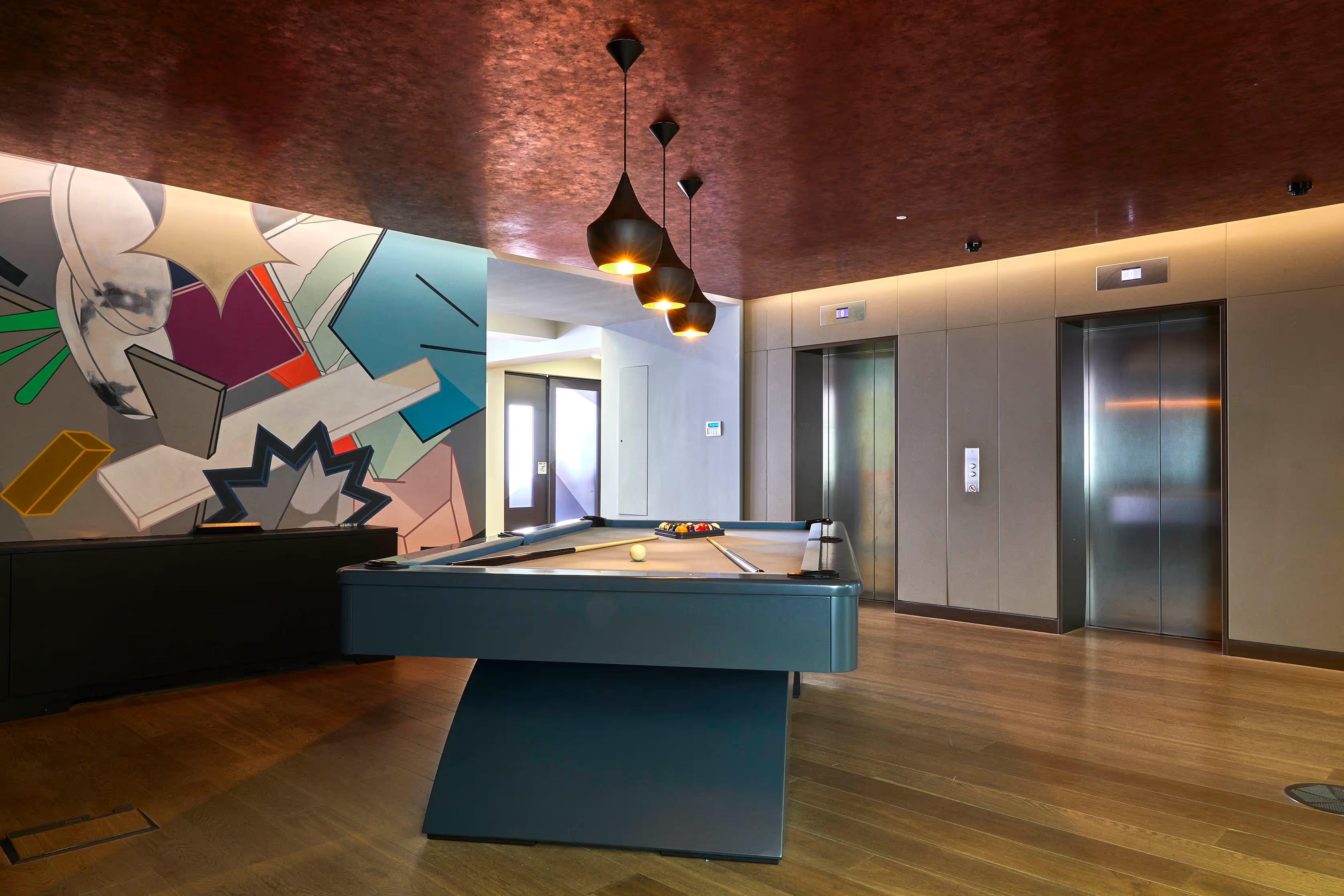
The London studio sits across two floors in Covent Garden. The lifts open onto a corridor with black walls and ceiling, and a neon sign that says “Thrills.”
The curved front of the reception desk is dressed as old-fashioned bookshelves, and there’s a pool table round the corner.
Each studio has a wall of staff photos from when they were children. The overseas expansion plans are a reflection on the domestic market. “As an economy, the UK isn’t growing,” Mundae says. “But there are parts of the world that are growing, and as regions start to develop, what we have is highly sought-after.”
This chimes with the Design Business Association’s findings that its members have increased their share of gross income from overseas clients from 20% to 34%, connected, the DBA says, to “the sluggish UK economy.”
India is next in Bulletproof’s plans, where they’re already working for Diageo, Mondelez International and others. That might not look like opening a studio there though. “It might be an acquisition, because it’s its own world,” Mundae says.” It takes up a lot of energy to set up from nothing – the paperwork alone – plus you acquire some clients and local talent if you acquire.”
Ghana is attractive because of its big brewing culture and the amount of property development going on, and he thinks there’s “a huge opportunity in Kenya.”
He’s looking at a new studio in a central European country, to add to Amsterdam. And Abu Dhabi and Saudi Arabia could follow. But this bullishness isn’t blind. Mundae recognises that not everywhere is viable. “There’s a lot of work in Cairo and some great talent there, but the numbers don’t add up because the fees aren’t great.”
Mundae is not squeamish in talking about money. He says people often baulk at their fees, but he is very confident they are worth it. “We’re told we’re the most expensive agency that our clients work with. But you have to pay for brilliant people, and we get it right first time,” he says. This confidence may also explain his drive to expand, not just geographically.
“I’m all about growth – of business, culture, people. As well as looking at new territories, I’m looking at new skills, how to adopt AI, and what are new areas we want to grow into.” To that end, the agency is looking to develop its capabilities in motion, digital and social channels, because that’s where its clients’ audiences are.
But he never wants to lose Bulletproof’s traditional FMCG roots – the London studio alone works with big-name brands like Cadbury and Toblerone, Johnnie Walker and Don Julio and Tate & Lyle.
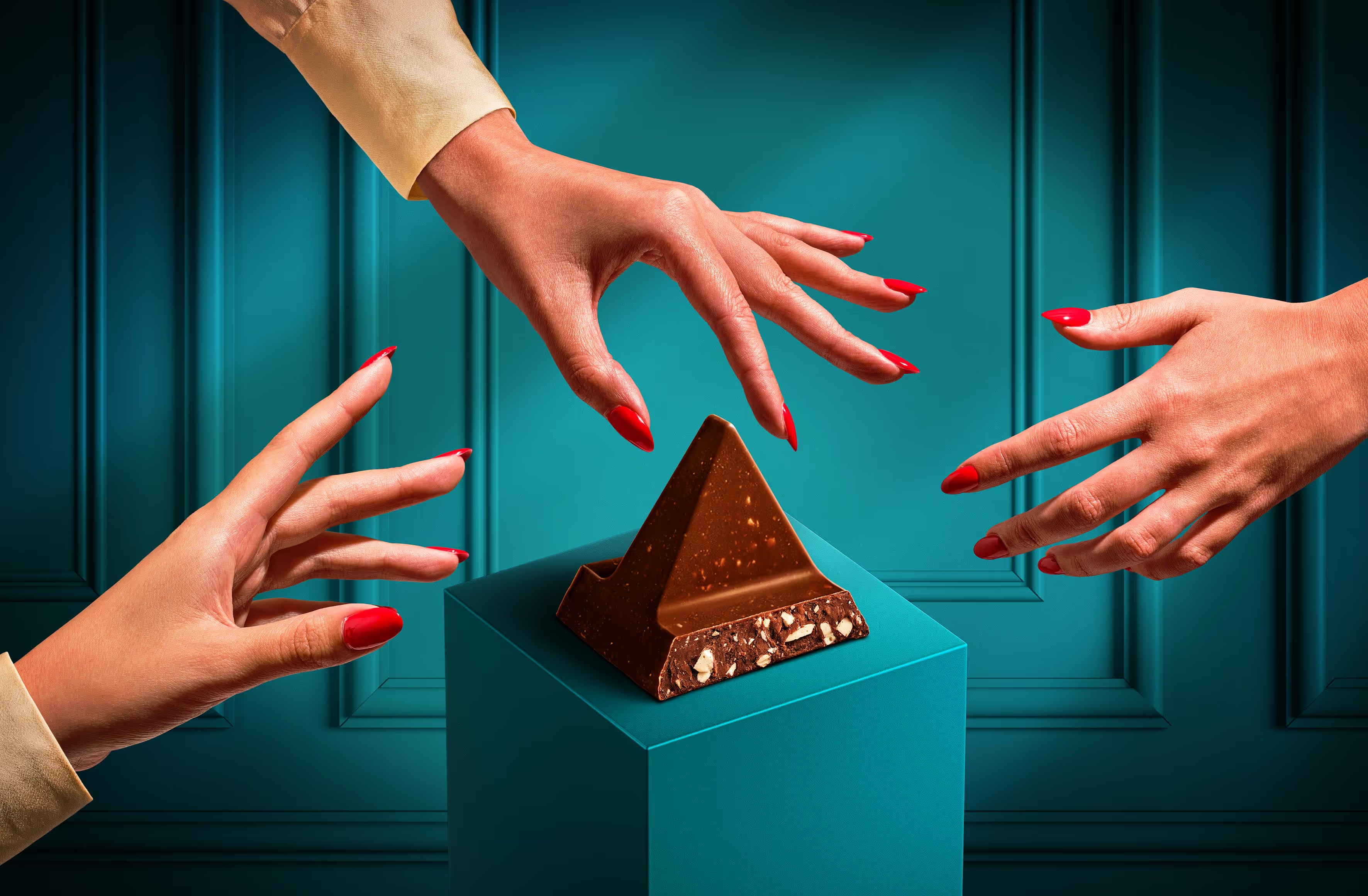
“In our industry it’s become a dirty term, but I still love that work. The way you think about pack and consumer, it’s so in-depth, I think that’s dynamite.”
Many high-profile brand and packaging agencies have already been snapped up by conglomerates – Design Bridge to WPP, WMH&I to Loewy Group, Turner Duckworth to Publicis Groupe – and others, like JKR, have sold minority stakes. Against that backdrop, potential buyers come knocking on Mundae’s door around four times a year.
So far, none of these offers have appealed. But, he says, “I like the idea of working with a business which has amazing clients that we probably wouldn’t reach, being a brand agency. If they could plug us in, I’d love that.” But does it ever get stressful, spinning so many plates? Apparently not – in fact Mundae seems to thrive on it. “I’ve put everything into this,” he says. “It’s my life’s work.”