How Convenience Food Brands Can Become Brands of Choice
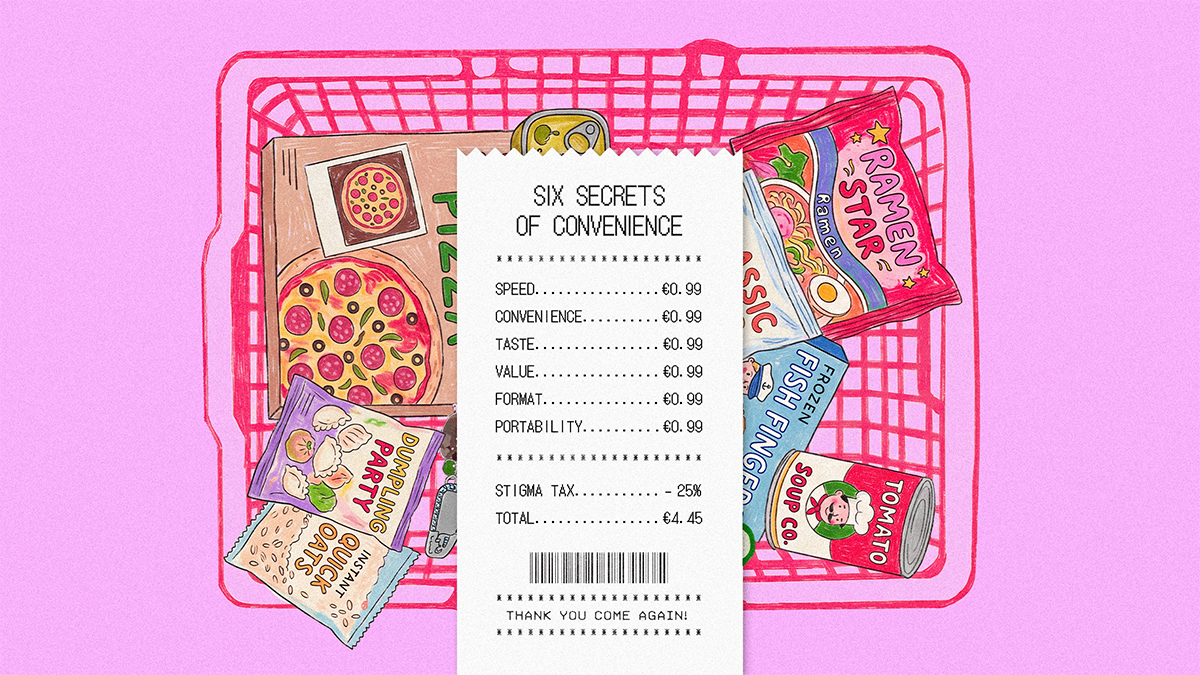
Six ways food brands can escape convenience stigma and create consumer desire.
Convenience food gets a bad rap. But it’s hard to imagine modern society without it.
To understand why, try putting yourself in the shoes of a 1950s housewife (and it was almost always a housewife). When Swanson launched TV Dinners in 1954, it didn’t just promise meat, potatoes and peas in a tray. To a generation of homemakers, it promised freedom.
Freedom from the domestic labour required to put three scratch-cooked meals on the table every day. And freedom to spend that time doing almost anything else.
As the way we ate changed, society changed with it. Dual income households. Longer working hours. Smaller homes. Solo living. Convenience food didn’t create them, but by liberating millions from domestic drudgery, it made new ways of living possible.
And today… well, life hasn’t exactly got less complicated.
We work longer and live faster. Our homes are smaller, our attention is all over the place, and the chain of culinary knowledge once passed down the generations has broken. Add a cost-of-living squeeze to the mix, and the idea of cooking every meal from scratch feels less like an expectation and more like a fantasy.
As a result, sales of convenience foods are up — the ready-meal market is now valued at $113.53bn globally and growing at 3.01% CAGR — as are takeaways, meal prep kits and RTDs. But the rising tide isn’t lifting all bowls. Just as consumers are wanting and needing shortcuts more than ever, many convenience brands are being left behind.
The Shortcut Stigma
Somewhere along the way, convenience food picked up some baggage.
It’s seen as lazy. Artificial. Unhealthy. Uninspired. The kind of food you eat when you can’t cook, won’t cook or have otherwise failed to get your life together. One study even found that just being told a product was ready-to-eat was enough to lower expectation of taste and healthiness.
Same product. Same ingredients. Same experience. But slap on a ready-to-eat label and people are instantly less interested. With 54% of UK households now avoiding Ultra-Processed Foods, the stigma is set to grow even stronger
Six Ways To Make Convenience Desirable
In this new era, convenience brands need to go beyond speed and ease, and challenge the perception that choosing convenience means settling for less.
We’ve looked at the brands already escaping shortcut stigma, and making convenience feel desirable, credible and worth choosing. Across them, six clear levers emerged revealing how brands can redefine the category, from the occasions they own to the authority they borrow, the role consumers play and the cues they put into the world. That’s where branding, design and innovation have a powerful role to play.
1. Own A Moment
One of most successful ways to avoid being labelled as the emergency option is to own a distinctive ritual, brand experience or occasion.
That's the thinking behind NISSIN’s Gaming Cup: a brothless, caffeine-infused noodle cup designed for late-night sessions and one-handed eating. Smartly, the Japanese brand rooted the role in an existing association with gaming. By making it official, they shifted perceptions from emergency fuel to permissible ritual.
Closer to home, Old El Paso has found success with its long-running Taco Tuesday promo — successfully reframing meal kits as the spark for something social, not just an easy option.
2. Borrow Credibility
If convenience can feel like a cop-out, borrowing credibility from a name with credentials can elevate a product from shortcut to hack.
Chef and restaurant brands have an obvious head start here. Wagamama, itsu and even Michelin-starred names like Noma and Momofuku have found success with ready-to-eat ranges.
But a famous name above the door isn’t the only route. COOK’s frozen ready meals go big on handmade cues and even feature the signature of the chef who made it on-pack, lending every meal kitchen-approved status.
3. Hand Over Control
You’ve heard of the IKEA Effect. But what about the Buldak Effect?
The cult noodle brand understands that people feel more positively about things they’ve made themselves, so it positions its noodles as the starting point for endless flavour remixes. It’s a smart example of how brands can turn a convenient product into a more participatory, personalised experience. To tap into the same effect, brands might experiment with putting recipe ideas on pack or showcasing consumer creations on social.
Just be prepared to give up some control — once people start making it their own, they may take your product somewhere you never would, as some of the more ‘interesting’ Buldak creations show.
4. Be A Little Extra
What if convenience wasn’t a compromise, but an upgrade? Through premium brand positioning, packaging design and product storytelling, convenience brands can elevate perceptions of quality and value.
By over-indexing on premium cues, provenance stories and all the signifiers of proper Italian food, Crosta Mollica has elevated frozen pizzas from guilty secret into something closer to a treat. Huel takes a different route, with a purposely spartan pack design that puts nutrition front and centre, making functional benefits the core of its appeal.
5. Break The Mould
Brand and product innovations, from new formats to unexpected flavours, can disrupt category conventions and turn everyday convenience into something buzz-worthy.
Heinz proved it with Carbonara in a Can, taking one of Italy’s most fiercely protected dishes and putting it in an knowingly wrong format. It generated endless discussion online; more importantly it sold out everywhere. STOCKED’s modular meals take a different route: innoblocks designed to be mixed, matched and built into different dishes, making convenience feel genuinely new.
6. Make It Real
Convenience’s association with artificiality is a major barrier. Unsurprisingly, some of the most successful brands have worked hard to make their product feel real, natural and as close to ‘real foods’ as possible.
RENOURISH does this with soups that look and feel closer to fresh than ready-made. Packaging design can also play a role in shifting perceptions, from material choices and structural design to visual cues that communicate freshness. M&S now uses paper-fibre trays for dishes like Tikka Masala, helping the meal feel less processed before you’ve even opened the pack.
What’s Next For The Sector
Convenience isn’t going anywhere. As lives get busier, households fragment and cost and time pressures keep rising, we expect the market to keep growing.
What’s changed is our expectations. People still want easy, but they don’t want to feel like they’re settling.
In this new era of convenience, the brands that win will be the ones that give people something more: a ritual, a point of view, a sense of expertise or a better experience.
This is where brand strategy, design and innovation have a critical role to play. The six levers offer different ways to building genuine consumer desire. The challenge for brands is identifying what’s holding them back and finding the right level of category disruption to move forward.
Because the future of convenience won’t be solely about making life easier. It’ll be about making convenience a choice people feel good about making.